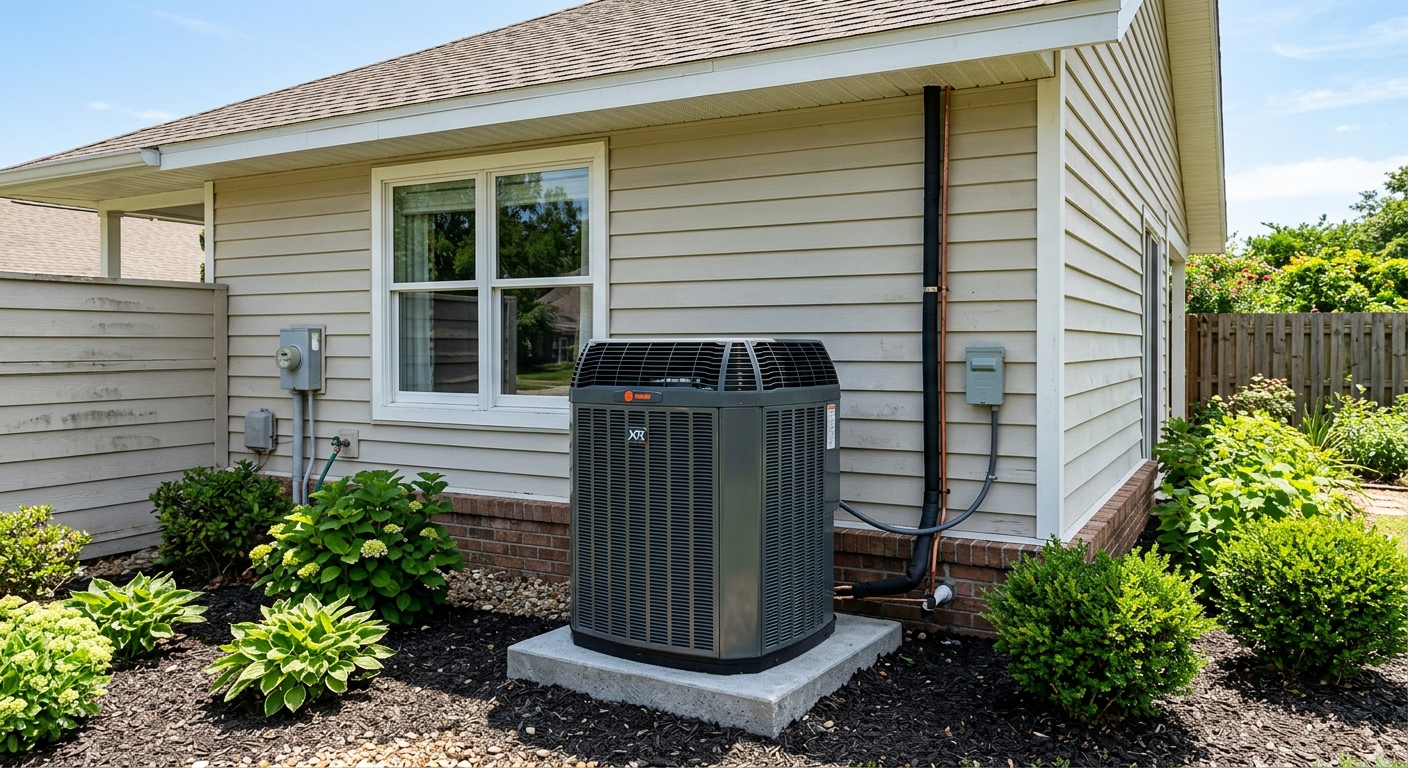
Patton heating and cooling prices by system type — 2026
Patton, nestled within Centre County, faces the same retrofit and replacement challenges seen across the State College–Bellefonte area. With a homeownership rate just above half (52.3%) and over a third of homes built before 1980, most residents are looking at either modernizing older systems or replacing equipment in houses already equipped with some form of ductwork (U.S. Census Bureau, ACS 2024). Around Penn State and across the area, 1960s–1980s multifamily construction means many homes have existing ducts—though these might only be sized for furnace heating, not central air.
Patton’s climate is heating-dominated. You’ll log roughly 6,300 heating degree days versus just 750 cooling degree days each year. That translates to far longer heating seasons than cooling, driving decisions toward systems that can handle sustained low temps and keep bills manageable. Most homes need reliable, efficient heating as a priority—cooling matters, but it’s not the heaviest line item when selecting your system.
| System |
Best for |
Efficiency |
Price range (installed) |
| Central AC replacement (existing ducts) |
homes with sound ductwork |
16–20 SEER2 |
$4,900–$12,000 |
| Air source heat pump (ducted) |
year-round heating and cooling |
8–10 HSPF2 |
$7,900–$16,500 |
| Cold-climate heat pump (ducted) |
heat pump as primary heat |
9–11 HSPF2 |
$13,000–$16,500 |
| Ductless mini-split (single zone) |
additions, rooms without ducts |
20–30 SEER2 |
$3,100–$6,900 |
| Full duct system installation |
homes with no existing ducts |
— |
$8,800–$17,500 |
Installed estimates for a typical Patton home. Equipment tonnage, duct condition and electrical capacity move these more than brand.
Retrofit versus replacement in Patton
The housing mix in Patton is tilted toward retrofit and replacement—a direct result of nearly 35% of homes built before 1980. In these older houses, it isn’t just the HVAC equipment that shows its age. Ductwork may be poorly sealed (if it exists at all), insulation is often lacking, and windows run the range from vintage single-pane to more recent upgrades. Especially in mid-century homes, ducts could have been sized for heating only, meaning they may not distribute cooling evenly if you add a central AC or heat pump.
In homes without existing ducts—common in pre-1980 stock or even some rural builds—adding central air or a heat pump almost always means a full duct installation, which carries a higher price. Many older homes also have older, smaller electrical panels, which may not have capacity for an all-electric heat pump. Gas and oil furnaces venting into aging chimneys can be a safety and code concern in this area.
Where newer suburbs appear, especially in the State College–Bellefonte corridor, you’re more likely dealing with 90s or 2000s equipment finally at end of life. Here, the original HVAC was often oversized—as builder-grade systems usually were—so replacements need right-sizing, not simply duplicating what’s there.
Why your ducts may be the real problem in Patton
Ductwork in older Patton homes is often the hidden culprit behind high utility bills and comfort complaints. Especially in houses from the 1960s–1980s wave around State College, duct design and sealing were afterthoughts. It’s common to see unsealed joints, leaky connections, and undersized return ducts—meaning a large chunk of your heated or cooled air is lost to attics, crawlspaces, or even wall cavities.
A duct blaster test is the tool for the job: it pressurizes your ductwork to directly measure leakage, showing you (in cfm) just how much air isn’t making it to the rooms that need it. Depending on test results, targeted duct sealing often pays for itself faster than high-end equipment, especially if your returns are undersized—a chronic problem not visible until you measure.
Runs through unconditioned attics or crawlspaces are another weak link, freezing ducts in winter and baking them in summer. In homes never designed for central AC, these “add-on” ducts were frequently undersized or poorly insulated. That means slow cooling, noisy operation, and uneven temperatures no matter the equipment.
The honest call: test and assess your ducts before putting in new heating or cooling equipment. It’s far cheaper to patch a system that’s basically sound than to rip out and replace ducts after a failed install—and it keeps new equipment running at its rated output from day one.
Permits, licensing and inspections in Patton
Pennsylvania does not issue a statewide HVAC license for residential work. Instead, contractors must hold Home Improvement Contractor (HIC) registration through the Pennsylvania Office of Attorney General for any project above $500. Individual Centre County municipalities—like Patton Township—are responsible for code enforcement under the Pennsylvania Uniform Construction Code, not the state itself. This means permitting and inspections happen at the local code office, and requirements can differ from neighboring towns or boroughs.
Federal law still requires EPA Section 608 certification for any technician handling refrigerant, whether they're installing a heat pump or an air conditioner. There’s no state-issued HVAC license, but do ask to see HIC registration and verify workers’ compensation coverage. You can do this online through WCAIS—the state insurance verification system referenced in the rules—to confirm a contractor is properly insured before work begins. For most residential projects including HVAC installation or replacement, the job will need a written contract and you are entitled to a three-business-day right of cancellation under the state’s Home Improvement Consumer Protection Act. Mechanical permits for replacements or new systems are routine in State College and a good practice everywhere else.
Reading an installation proposal
A solid HVAC proposal shows everything you need to judge and compare. First, insist on specific model numbers for both indoor and outdoor units. The right match—not just “Brand X, 3 ton”—is what delivers the promised efficiency. Ask for the tonnage, and the Manual J load calculation it’s based on. Electrical details matter: confirm whether your panel can handle a new heat pump, or if an upgrade is included. A quote should also spell out whether your old refrigerant line set will be replaced or reused, list any condensate management, specify the thermostat type, and price out mechanical permits. Finally, commissioning—the step where the installer measures airflow, pressures, and charge—is worth seeing in writing. Labor warranty is separate from equipment warranty, and both should be listed. If you see a quote that’s just a brand name and a price, you can’t compare it to anything.
| Line item |
What to look for |
Red flag if… |
| Equipment |
model numbers, indoor and outdoor matched |
brand name only |
| Sizing |
load calculation attached |
matched to the old nameplate |
| Ductwork |
condition assessed, sealing scoped |
not mentioned |
| Electrical |
circuit and panel capacity confirmed |
assumed adequate |
| Line set |
replaced or documented as reused |
silent |
| Commissioning |
measured airflow and charge, documented |
no startup report |
| Warranty |
labour years stated separately |
manufacturer only |
| Permit |
included and priced |
'not needed' |
Manual J and the tonnage question
Choosing the right system size is the single most important call in Patton—not just for heating effectiveness, but for comfort and energy use. Oversizing isn’t a “safe margin”—it’s a defect. A too-big HVAC system short-cycles, meaning it turns on and off too quickly, never running long enough to remove humidity or deliver even temperatures. That leads to moisture, big swings between hot and cold, and short equipment life.
Every new system sizing should start with a Manual J load calculation. This method takes into account windows, insulation, house orientation, and, above all, local climate data. For Patton, the proper system must be able to keep your home comfortable at the winter design temperature of 2°F—that’s the coldest it’s expected to get during a typical winter, not an average day. Sizing by square footage or matching the old unit’s nameplate simply copies forward any mistakes, whether the original was oversized for heating, undersized for cooling, or cobbled together as each system was replaced over the years. The critical question for any contractor: “Did you run a Manual J, and can I see the calculation?”
If your quote doesn’t mention a load calculation, you’re not getting a system based on your home’s reality—and you’ll pay for that every month the system runs.
The central decision for a Patton homeowner
If you’re choosing between a new heat pump or furnace, Centre County’s long, cold winters (6,300 heating degree days and a winter design temperature of 2°F) are front and center. In years past, heat pumps dropped off drastically below freezing, making them a nonstarter for most Patton homeowners. Today’s cold-climate models, however, still perform well well below 20°F, making them a strong option if you want to move off fossil fuel or add air conditioning to a home without gas service.
But: capacity does still fall as temperatures near zero, so a standalone heat pump must be sized—and installed—by someone who understands these limits. That’s why dual fuel (a heat pump with a gas furnace backup) is a preferred option in homes with existing gas lines, and why it’s still sensible to stick with a furnace in the coldest, draftiest houses or where electrical upgrades aren’t feasible.
Natural gas service is common in State College and Bellefonte, where gas furnaces are efficient and economical. But many rural Patton-area homes rely on propane or oil. In those cases, a heat pump can dramatically cut your heating costs, especially if your house is well-insulated. For small, all-electric homes, or those with uneven ductwork, ductless multi-zones provide flexibility and room-by-room comfort.
| Option |
Installed cost |
Operating cost here |
Best when |
Incentive eligible |
| Gas furnace + central AC |
$4,900–$12,000 |
lower with gas service |
existing gas service, coldest zones |
yes, some utility |
| Ducted heat pump (cold climate) |
$7,900–$16,500 |
lower electric bills, no fossil fuel |
good envelope, all-electric goal |
yes, federal and state |
| Dual fuel (heat pump + gas backup) |
$13,000–$16,500 |
optimized for both fuels |
gas on site, deep cold spells |
yes, sometimes |
| Ductless multi-zone |
$8,800–$17,500 |
individual room control |
no ductwork, zone control |
yes—varies by program |
Frequently asked questions — HVAC installation in Patton
How cold does it get in Patton and does that affect heat pumps?
The winter design temperature for Patton is just 2°F, according to local code data. In practice, deep freezes are common, and each heating season is long—averaging around 6,300 heating degree days per year. This matters for heat pumps because, until recently, many models lost capacity or efficiency as temperatures dropped below 20°F. The new generation of cold-climate heat pumps now holds useful output even when it's close to zero outside, but your contractor still needs to size the system with our particular cold snaps in mind. That's why a competent installer will explain if a cold-climate model (typically priced at $13,000–$16,500 installed) or a dual-fuel hybrid would best fit your home and comfort expectations.
Is a heat pump a good choice for Patton winters?
Heat pumps have changed a lot since the 1980s. Today’s cold-climate models can heat effectively well below freezing, making them more suitable than ever for Patton’s long, cold winters. If your home is well-insulated and your ductwork is decent, a heat pump can handle the majority of your annual load. However, because our winter design temperature is 2°F, the installer must confirm the unit is rated to maintain comfort even in those coldest hours. In houses relying on propane or oil (common in rural Centre County), a heat pump can cut heating costs substantially. For homes with available natural gas and old, drafty envelopes, sometimes a gas furnace (installed for $4,900–$12,000) is still the most practical choice.
What does a heat pump cost installed in Patton?
In Patton, the installed cost for a ducted air source heat pump runs between $7,900–$16,500 depending on the size, whether it’s cold-climate rated, and the condition of your existing ductwork. Ductless mini-split systems for single rooms or small additions start at $3,100–$6,900. Full replacements—where you’re also installing new ducts—will land in the higher range. If you need supplemental electric service upgrades, that will add cost, which is something your contractor should spell out clearly in their proposal.
What is commissioning and why does it matter?
Commissioning is the process of verifying that your new HVAC system is operating exactly as it should when installed. In Pennsylvania—and especially in older Patton homes—commissioning means measuring airflows, refrigerant charge, and running a set of operational tests. The goal is to ensure the system hits manufacturer performance, doesn’t short-cycle, and provides balanced comfort room-to-room. Too often, contractors skip this step altogether, leading to reduced efficiency and shorter system lifespans. If you’re paying $7,900–$16,500 for a quality heat pump, you deserve a startup report in writing. Ask to see commissioning details in your proposal before you sign.
What is SEER2 and how is it different from SEER?
SEER2 is the updated efficiency standard for cooling, replacing the old SEER ratings. It uses tougher laboratory test procedures that better simulate real-world airflows and backpressures found in systems installed in Patton-area homes. While SEER measured energy use in perfect lab conditions, SEER2 corrects for more realistic duct losses and installation quirks—especially important given the leaky or undersized ducts found in many local houses. If you’re comparing systems, look for 16–20 SEER2 for a modern central AC, with pricing from $4,900–$12,000 fully installed. Higher SEER2 means lower bills, but only if your house and ducts are up to snuff.
How long should an HVAC system last in Patton?
In Patton, a well-maintained furnace, heat pump, or central AC system should last 15–20 years, though with our long heating season, systems get more annual runtime than in southern states. Many local homes—especially those built before 1980—are still running 25-year-old units, but these are usually much less efficient than current models. If your system is over 15 years old and frequent breakdowns occur, replacement is likely more cost-effective. For context, a full ducted heat pump replacement currently runs between $7,900–$16,500.
Does my utility offer a heat pump rebate in Patton?
West Penn Power is the main electric provider in Patton and most of Centre County. They often participate in federal and state incentive programs that offer rebates for high-efficiency heat pump installations, though the exact terms vary from year to year. Rebates aren’t always automatic and usually require that licensed and insured (HIC-registered) contractors handle your install. A typical qualifying ducted heat pump, which costs $7,900–$16,500 installed, may be eligible for a few hundred dollars in rebates—sometimes more if you’re displacing electric resistance or oil heat. Double-check current programs before you commit.
Does Pennsylvania license HVAC contractors?
Pennsylvania does not have a statewide trade license for HVAC contractors working on residential projects. Instead, any contractor working above $500—including those in Patton—must be registered for home improvement work through the state’s Attorney General. Some Centre County municipalities require separate mechanical permits, so local experience matters. Before spending $4,900–$12,000 or more on a new system, ask for both a current HIC registration number and proof of workers’ compensation insurance—these can be verified online. For refrigerant work, they must also hold EPA Section 608 certification.
How much does a new HVAC system cost in Patton?
A new HVAC installation in Patton varies by the type of home and system you choose. Replacing a central AC, using existing good ducts, generally falls in the $4,900–$12,000 range installed. Installing a full ducted air source heat pump, which offers both heating and cooling, is typically $7,900–$16,500. If your house needs new ductwork, that will add to the bill, usually landing the project at $8,800–$17,500. The wide range reflects the real differences in home layouts, duct condition, and the need—or not—for electrical upgrades in Patton-area homes.