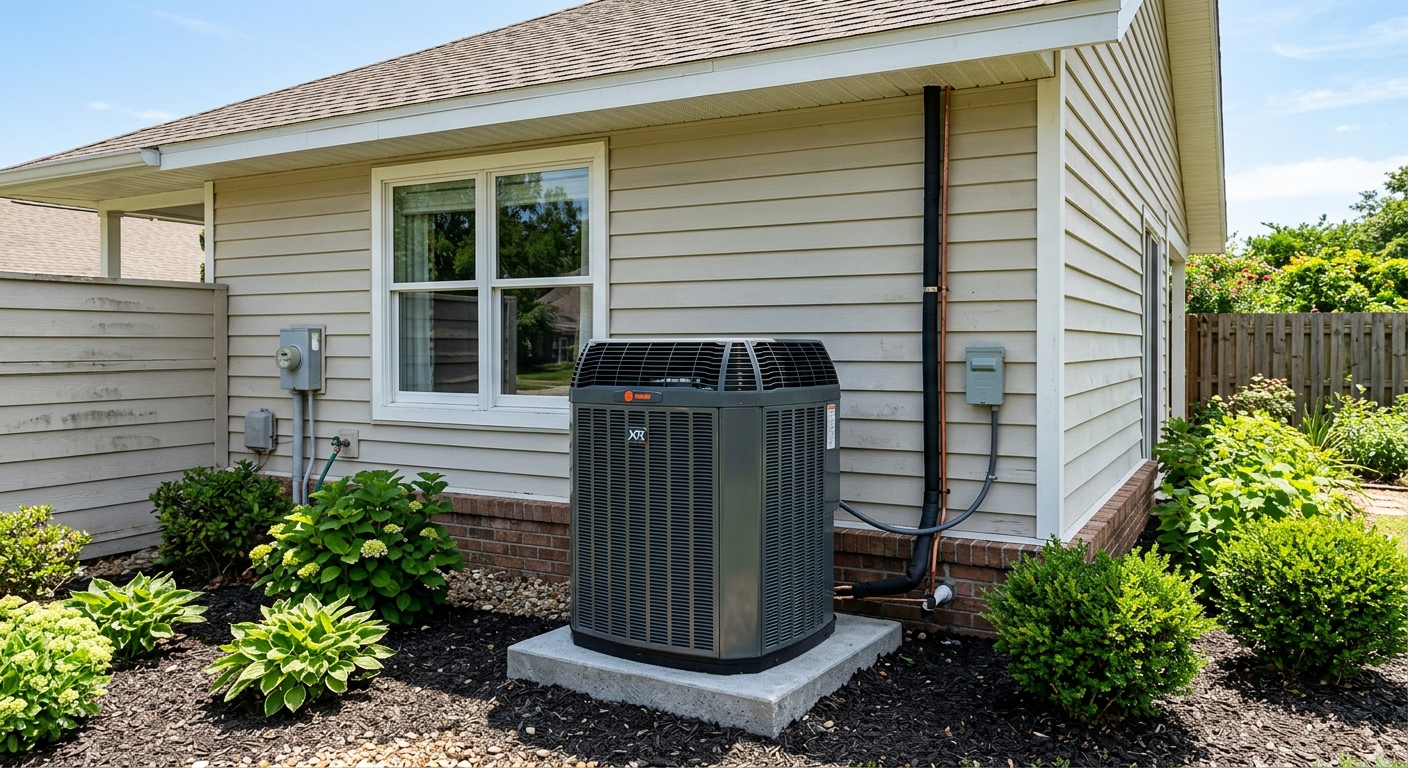
What a new HVAC system costs in Warren
In Warren, you’re looking at a housing stock where 92.5% of homes were built before 1980 (U.S. Census Bureau, ACS 2024), so full-system retrofits and fresh ductwork are more common than simple swap-outs. The homeownership rate here is 58.2%, which means many calls in this market come from people intending to stay put, invest in efficiency, and want real long-term value out of their HVAC spend. Homes built between 1900 and 1940 often lack central air ductwork or have registers sized only for old coal or oil furnaces — so ductless options, or full duct additions, remain strong sellers alongside typical “cut-in” retrofits and upgrades.
Warren’s climate is firmly heating-dominated, with 6,200 heating degree days and just 800 cooling degree days per year. If you’re weighing where your dollars make the most difference, prioritize heating performance, reliability, and cold-weather efficiency. Air source and cold-climate heat pumps are getting more traction, especially where gas is unavailable. For cooling, higher SEER2 units do add comfort but aren’t the prime driver of savings here. Your actual installed price will hinge most on equipment size, duct condition, and whether panels or venting upgrades are needed, not simply on brand.
| System |
Best for |
Efficiency |
Price range (installed) |
| Central AC replacement (existing ducts) |
homes with sound ductwork |
16–20 SEER2 |
$4,500–$10,500 |
| Air source heat pump (ducted) |
year-round heating and cooling |
8–10 HSPF2 |
$7,100–$15,000 |
| Cold-climate heat pump (ducted) |
heat pump as primary heat |
9–11 HSPF2 |
$11,500–$15,000 |
| Ductless mini-split (single zone) |
additions, rooms without ducts |
20–30 SEER2 |
$2,900–$6,300 |
| Full duct system installation |
homes with no existing ducts |
— |
$8,000–$16,000 |
Installed estimates for a typical Warren home. Equipment tonnage, duct condition and electrical capacity move these more than brand.
What a real HVAC quote contains
A true apples-to-apples HVAC quote in Warren will spell out every piece of equipment — not just the brand, but the exact model numbers for both indoor and outdoor units. If those units aren’t matched, they can’t deliver the efficiency promised. The quote should include the tonnage, but more critically, it should attach your home’s load calculation showing how that size was determined. Ductwork assessment is essential here, especially in older Warren homes where leakage and undersized returns are chronic issues. The quote needs to address the refrigerant line set (will it be reused or replaced?), what’s happening with your electrical panel, and whether installing new dedicated circuits is included. Details like a new thermostat, full condensate management, and all required city or township permits must also be laid out.
A reputable contractor will specify a commissioning process — a documented test of airflow and refrigerant charge after installation. Labor and equipment warranties should be clearly split out, so you know what’s covered by the manufacturer and what the installer guarantees. A quote that just lists a brand and a bottom-line price, skipping these details, is not comparable and puts you at risk for unpleasant surprises — especially with Warren’s mix of very old and much-modified homes.
| Line item |
What to look for |
Red flag if… |
| Equipment |
model numbers, indoor and outdoor matched |
brand name only |
| Sizing |
load calculation attached |
matched to the old nameplate |
| Ductwork |
condition assessed, sealing scoped |
not mentioned |
| Electrical |
circuit and panel capacity confirmed |
assumed adequate |
| Line set |
replaced or documented as reused |
silent |
| Commissioning |
measured airflow and charge, documented |
no startup report |
| Warranty |
labour years stated separately |
manufacturer only |
| Permit |
included and priced |
'not needed' |
Retrofit versus replacement in Warren
With 92.5% of Warren homes built before 1980, this is overwhelmingly a retrofit market (U.S. Census Bureau, ACS 2024). Many homes, especially in the city and older townships, were never designed for central cooling. Even if ductwork exists, it’s often sized for a big old furnace, not air conditioning, and may be leaky or unreachable in tight attics or crawlspaces. Full system replacements often turn into full retrofits — adding or resizing returns, sealing old seams, or entirely new duct installations.
Insulation levels and window quality in these mill- and oil-boom era houses lag modern standards, ramping up heating loads. Panel amperage can be another bottleneck: a central heat pump may require a panel upgrade, or at least dedicated circuits. Older chimneys don’t always meet code for new gas appliances. If you’re outside the city, propane and oil remain common, limiting your options versus the mains gas grid found in Warren itself. In rare spots with post-1980 housing, you may be looking at the first replacement cycle now as builder-grade gear nears the end, but that’s a much smaller slice of the local market.
Permits, licensing and inspections in Warren
Pennsylvania does not issue a statewide HVAC trade license for residential work. Any contractor working in Warren must have Home Improvement Contractor (HIC) registration from the Pennsylvania Office of Attorney General on jobs over $500, not a trade license. Always verify this registration through the state portal named in HICPA. Municipality is key—mechanical permits and code enforcement fall to the City of Warren Codes Department or to each township’s code office. Don’t settle for a verbal assurance that a permit “isn’t needed.” Replacement or new installation of any central HVAC system in Warren or the townships requires a mechanical or building permit, full stop.
Handling refrigerants like R-410A and R-454B means your contractor must hold an EPA Section 608 certification; this federal law applies everywhere, regardless of local code. You can (and should) request proof. For employers, workers’ compensation coverage is required by state law and can be checked via WCAIS before any work starts. Homeowners have strong consumer protections: a written contract (not just a handshake or text) is required for jobs over $500, and you have a three-day cancellation right in Pennsylvania under HICPA. Always ask to see documentation that matches these rules before work begins.
What size system does a Warren home need?
Right-sizing is the single most important thing an HVAC contractor can do for a home in Warren. Too many contractors still rely on rules of thumb like “one ton per 500 square feet,” but with the kinds of older homes found here, that’s a sure way to install an oversized (or undersized) system. An oversized system will short-cycle — turning on and off too quickly — which causes poor dehumidification in summer, drafty temperature swings in winter, inflated energy bills, and often premature equipment failure. This isn’t an “extra margin,” it’s a design flaw.
The only reliable method is a Manual J load calculation, tailored to the winter design temperature of 5 °F and your actual insulation, window type, air leaks, and occupancy. Ask this blunt question: “Did you run a Manual J load calculation, and can I see it?” If all sizing references the old system’s nameplate, you’re gambling on decades-old design choices in a home that’s likely seen plenty of changes since. For Warren’s heating-dominated climate, accurate sizing for the full 6,200 heating degree days is critical — both undersizing (leaving you cold) and oversizing (wasting money and comfort) are mistakes that can easily be avoided when the installer takes the time to do the numbers.
The refrigerant change and what it means for repairs
Most new HVAC systems arriving in Warren now use lower global-warming-potential refrigerants like R-454B or R-32, as required by the ongoing HFC phase-down. This doesn’t mean your older R-410A system is “illegal” or that you must replace perfectly running equipment. Service, repair, and replacement parts for R-410A remain legal and available — but the wholesale price of R-410A keeps rising as the supply tightens nationally. So, if you develop a refrigerant leak in an older system, the cost-per-pound of R-410A is higher than it used to be, affecting whether a recharge makes sense versus putting those dollars toward a new, more efficient unit.
If your Warren home’s system is only a few years old, keep servicing it as usual. The shift to R-454B and R-32 simply means that, when you eventually do replace, you’ll be on a refrigerant lineup that’s better for the environment and may operate at slightly higher efficiency. But there’s no regulatory gun to your head: repair remains viable until a major component fails or system performance drops off, and no one can force you to swap out a functioning R-410A system just because of the refrigerant change.
Ductwork: the part nobody quotes properly
In Warren’s older housing stock, duct leakage is an invisible money drain. Many homes from the 1900–1940 boom weren’t built with central forced air, and the ducts that were added later are often leaky, undersized, or both. It’s common for 20–40% of conditioned air to be lost through leaks and poor joints — making duct upgrades just as, if not more, important than equipment efficiency ratings.
A duct blaster test will measure leakage as a percentage of system airflow, showing you exactly how much air is lost before it ever reaches the rooms. Sealing works for accessible ducts, but if your returns are severely undersized (common in Warren homes originally heated by coal or oil), replacement or resizing can be essential. Pay special attention to duct runs routed through unconditioned attics, crawlspaces, or basements; these not only leak but also lose heat or cooling along the way.
Because so much of Warren County’s housing was retrofitted for central air, it’s often unclear whether ducts were ever sized or sealed for modern systems. The honest advice: get your ducts tested for leakage and sizing — ideally before you drop money on a high-efficiency furnace, AC, or heat pump. Upgrading equipment without fixing the distribution system is throwing good money after bad.
Frequently asked questions — HVAC installation in Warren
Who inspects HVAC work in Warren?
In the City of Warren, HVAC installations and replacements are inspected by the Warren City Codes Department, while townships like Glade and Conewango have their own code offices overseeing mechanical permits and inspections. For homes in these local jurisdictions, a permit is typically required for any central HVAC or furnace replacement. Your contractor is responsible for arranging the inspection as part of the permitted work. When in doubt, you can call your municipality’s code office directly (Warren City or your township) to confirm. Don’t skip this step — inspectors verify code compliance and basic safety for your protection. It’s a red flag if a contractor says “no inspection needed” for major work, even if you see that quoted elsewhere. Insist on a permit being pulled; it’s already included in a credible Warren HVAC quote.
What HVAC tax credits are available to Warren homeowners?
Warren homeowners can usually access federal tax credits for qualifying high-efficiency HVAC systems under the current IRS rules. The credits typically apply to central ACs, heat pumps, and furnaces meeting minimum efficiency thresholds. For example, a ducted heat pump installation that meets ENERGY STAR Most Efficient levels could qualify—a common project here, typically running $7,100–$15,000 installed. Be aware that manufacturer and utility rebates may also be available, but these change each heating or cooling season and are often first-come, first-served. Make sure your contractor provides you with the exact model numbers and efficiency ratings, as you’ll need these for paperwork. Always check with your tax advisor and local utility for the most current incentives available in Warren County.
How much does a furnace replacement cost in Warren?
For most Warren homes, a standard furnace-only replacement with no major ductwork or venting upgrades is in the price range of $4,500–$10,500, matching the installed price for central AC or furnace swaps using existing ductwork. That price can go up quickly if your home’s venting is out of date, or if your electrical panel needs an upgrade for a higher-efficiency or dual-fuel system. Homes from the 1900–1940 era sometimes need fresh ductwork or sealing for safe, reliable operation. Equipment costs also vary based on whether you have access to mains natural gas (more common in Warren and Youngsville) or are on propane or oil in the rural townships. Be wary of any “one low price” ad—Warren’s old housing stock is rarely that simple.
Should I repair or replace my HVAC system in Warren?
In Warren’s older homes, this call often comes down to the repair itself, the system’s age, and what’s lurking in the ductwork. If your central AC, furnace, or heat pump is more than 15 years old and facing a major repair (especially a failed compressor or heat exchanger), replacement usually makes more sense. For a major repair on a 12+ year-old R-410A system, factor in that refrigerant prices are rising as supply tightens under new rules—a recharge can get costly. Ductless mini-split repairs are typically economical unless the outdoor unit is shot; new single-zone systems here run $2,900–$6,300 installed. Always price both options, and ask the technician about duct leakage and system sizing. In Warren, ignoring the old ducts when making this decision often leads to money wasted and comfort complaints down the line.
How long does HVAC installation take in Warren?
For a straightforward furnace or central AC replacement in Warren with sound ductwork, most installations are completed in one full day. If your home needs a complete duct system installation or a full retrofit (which is common in pre-1940 homes), the job can easily stretch to two or three days, occasionally longer for multiple zones or extensive sealing. Adding ductless mini-splits often takes just a half to one day per zone, so a simple single-zone job (priced at $2,900–$6,300) can be fast. The biggest delays tend to come from waiting on permits and municipal inspections, not the crew itself. Always ask your contractor for a clear timeline, and factor in that local permitting authorities work at different speeds, especially during peak heating or cooling seasons in Warren County.
Is a high-efficiency system worth the extra cost here?
In Warren, where heating outweighs cooling by nearly 8 to 1 based on degree days, investing in a high-efficiency furnace or cold-climate heat pump is usually worth the added spend—especially in an older, draftier house. On the cooling front, ultra-high SEER2 AC units can improve comfort but won’t deliver dramatic savings given our mild summers. For a cold-climate ducted heat pump system, expect a price band of $11,500–$15,000 installed, but savings on fuel (especially on propane or oil) can be substantial over a typical winter. Carefully weigh efficiency upgrades along with duct sealing, as glaring losses in leaky ducts burn up your savings far faster than a slightly lower equipment rating.
Which utility serves Warren?
Most Warren city and nearby borough homes are served by Penelec for electric (a FirstEnergy company), and National Fuel Gas handles mains gas. Rural townships increasingly rely on cooperative or municipal electric, while propane and fuel oil dominate for heating where gas mains aren’t available. Utility availability directly affects which HVAC system makes the most sense for your home—for example, central heat pumps (priced at $7,100–$15,000 installed) may be more attractive where gas is unavailable. Always confirm your household’s fuel and power setup before signing for new equipment, as swapping between sources (gas to electric or vice versa) can require upgrades and sometimes new permits or inspections.
Is an annual maintenance plan worth it?
In Warren, where heating equipment does the heaviest lifting each year, a professional maintenance plan often pays for itself by minimizing breakdowns and extending system life, especially given the age of local homes. A good plan will include an annual tune-up for your furnace, AC, or heat pump, which helps catch failing components before they take out the whole system. Repairs tend to spike after the peak heating season; winter breakdowns here mean real discomfort. Contractors often discount service calls for plan holders and prioritize these customers for emergencies. For a typical Warren heat pump or AC, spending a little up front (think less than 10% of the installed cost, say off $4,500–$10,500 for AC replacement) can save you being caught on a waitlist during a January or July cold snap.
Can I service my R-410A system after the refrigerant change?
Yes, Warren homeowners can still have their R-410A-based systems serviced or recharged—these systems remain legal to repair and maintain. The refrigerant phase-down only affects the manufacture and sale of new systems; there’s no rule forcing you to replace a working unit. However, be aware that the price of R-410A is rising as new refrigerants like R-454B and R-32 become standard in the market. If your system develops a leak or loses charge, repairs may be costlier than they were in the past. Eventually, you’ll want to weigh the price of a major repair versus installing a new unit, which ranges from $4,500–$10,500 for a central AC replacement in Warren. Until then, keep your older equipment running through regular maintenance, and start budgeting for eventual replacement only when repairs seem excessive.