What a new HVAC system costs in Wilson
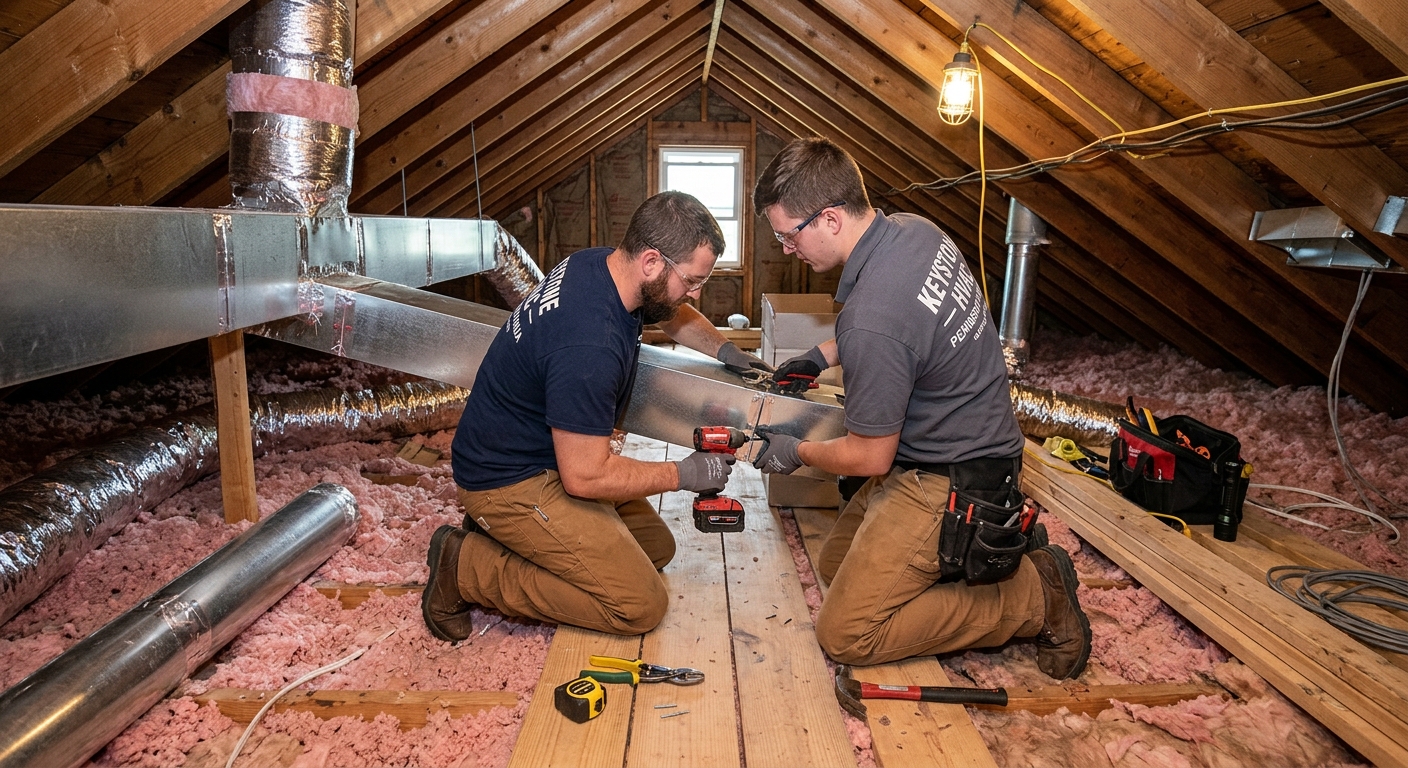
Wilson's older housing stock and high rate of homeownership mean that most HVAC work here is retrofit or replacement, not first installs. With 86.6% of homes built before 1980 (U.S. Census Bureau, ACS 2024), a large share of Wilson homeowners deal with vintage ductwork, small utility spaces, and legacy heating systems. Central air conditioning is common where there’s existing ductwork, but many rowhomes and compact lots—particularly those patterned after early-1900s Bethlehem and Easton housing—present challenges for outdoor condenser placement or new duct runs. In these homes, adding or redoing ductwork can be the largest line item.
Heating needs outweigh cooling here. Wilson sits in a climate with 6,100 heating degree days and just 850 cooling degree days per year—a clear sign this is a heating-dominated market. That shifts the value equation: heat pump efficiency and robust heating have a bigger payoff than premium cooling-only units. For many, a ducted or ductless heat pump replaces both the AC and the furnace in a single package, but not every home is a fit, especially with older duct layouts and tight basements.
| System |
Best for |
Efficiency |
Price range (installed) |
| Central AC replacement (existing ducts) |
homes with sound ductwork |
16–20 SEER2 |
$5,000–$12,000 |
| Air source heat pump (ducted) |
year-round heating and cooling |
8–10 HSPF2 |
$8,000–$17,000 |
| Cold-climate heat pump (ducted) |
heat pump as primary heat |
9–11 HSPF2 |
$13,000–$17,000 |
| Ductless mini-split (single zone) |
additions, rooms without ducts |
20–30 SEER2 |
$3,200–$7,000 |
| Full duct system installation |
homes with no existing ducts |
— |
$9,000–$18,000 |
Installed estimates for a typical Wilson home. Equipment tonnage, duct condition and electrical capacity move these more than brand.
Repair or replace your Wilson system?
In Wilson’s older homes, many HVAC systems are well past their midlife mark—but that doesn’t mean immediate replacement is always smart. Consider repair if your system has life left, especially if it’s under 10 years old and hasn’t required frequent service. As a rule of thumb, if your repair is less than a third of replacement and there’s no major component (compressor or heat exchanger) failure, fix it. Wilson’s cold winters mean reliability counts for more than slight efficiency gains, so don’t chase new equipment just for the promise of better bills unless there’s a real payoff.
If your system suffers a cracked heat exchanger (on a furnace) or a failed compressor (on a heat pump or AC outside warranty), replacement is required—the former is a carbon monoxide risk, the latter is the price of a new unit. R-410A units remain serviceable for now, but refrigerant leak repairs get pricier as the phase-down continues. In all other cases, test your ductwork and insulation before deciding efficiency alone warrants a major upgrade. Many calls in Wilson turn out to be airflow issues or poor seals, not the equipment.
| Situation |
Recommendation |
Typical cost |
Reasoning |
| Under 10 years, single component failure |
Repair |
$300–$1,200 |
Unit has service life remaining, single part fix |
| 10–15 years, repair over a third of replacement |
Consider replacing |
$5,000–$12,000 |
Approaching end of expected life, avoid sunk cost |
| 15+ years, any major failure |
Replace |
$5,000–$12,000 |
Most systems ready for replacement after 15 years here |
| Cracked heat exchanger, any age |
Replace immediately |
$5,000–$12,000 |
Carbon monoxide risk—cannot be left in use |
| Compressor failure past warranty |
Replace |
$8,000–$17,000 |
Cost rivals new unit, especially with R-410A phase-down |
| Working system, high bills |
Test ducts and envelope first |
$300–$800 |
Most “efficiency” issues are airflow or leakage |
Reading the yellow label
HVAC systems in Wilson are labeled with efficiency ratings that help predict electric and fuel usage. For cooling, you’ll see SEER2 (Seasonal Energy Efficiency Ratio 2), and for heating, HSPF2 (Heating Seasonal Performance Factor 2). Older systems may have labels with SEER or HSPF alone—note the switch, as the new standards test under tougher conditions and aren’t strictly apples-to-apples.
There’s also AFUE (Annual Fuel Utilization Efficiency) for gas or oil furnaces, and EER2 for a snapshot of base-load cooling. In Wilson’s climate—with 6,100 heating degree days to just 850 for cooling—HSPF2 means much more than SEER2 for overall yearly costs. In practical terms, paying for a top-tier SEER2 system (above 20) won’t pay back in this part of Pennsylvania. Most homeowners will see the best return stepping up to a midrange efficiency (16–18 SEER2, 9–10 HSPF2), not paying a steep premium for modest extra cooling savings. Go after high HSPF2 with a heat pump, not premium SEER2, if your electric heating costs are the concern. The rest comes down to installation quality and proper sizing for your actual house—not just the sticker number.
Permits, licensing and inspections in Wilson
A common misconception is that Pennsylvania licenses HVAC contractors at the state level, but this isn’t the case for residential work. For a new or replacement HVAC system in Wilson, contractors must carry Home Improvement Contractor (HIC) registration—issued by the Pennsylvania Office of Attorney General—if the contract exceeds $500. Always verify a contractor’s HIC registration at hic.attorneygeneral.gov. Mechanical permits are handled locally; in Bethlehem (serving neighboring municipalities), even replacement of central systems requires a permit and inspection. Other tasks, such as thermostat swap in places like Nazareth, are commonly unpermitted.
Refrigerant handling is regulated federally. Anyone who installs or services central AC, heat pumps, or mini-splits must have EPA Section 608 certification for that work. While Pennsylvania doesn’t require an HVAC trade license, verify proper insurance and workers’ compensation coverage through the state’s WCAIS system (wcais.pa.gov). Municipal code offices inspect permitted installations for compliance with the Pennsylvania Uniform Construction Code, based on the IRC framework, with stricter rules in larger townships and boroughs. No one should ask you to waive your homeowner’s deductible or skip written contracts above $500—both are legally prohibited under Pennsylvania consumer protection rules.
Refrigerant rules and your existing system
Homeowners in Wilson with existing HVAC systems—especially those built in the last 10–15 years—mostly have equipment running on R-410A refrigerant. While new systems now use lower global warming potential (GWP) refrigerants such as R-454B or R-32 due to phase-down regulations, you are not required to swap equipment just because the factory no longer ships with R-410A.
Your system can still be legally serviced and topped off. The catch for Wilson homeowners is that, as R-410A production tapers off, the cost of the refrigerant itself is creeping upward. If you experience a major refrigerant leak in an older system, the repair could approach half the cost of a new, more efficient unit with a modern refrigerant. This doesn’t mean you need to preemptively upgrade, but it does nudge the repair-versus-replace equation in a leak situation. For regular maintenance or minor repairs, your R-410A system remains serviceable for years to come. The main impact is economic, not legal: weigh costs if repairs involve significant refrigerant, especially on systems past midlife. Nobody can or should force you to upgrade just because of new refrigerant models on the shelf.
Humidity and air quality in Wilson homes
Wilson faces long, cold winters and muggy summers—so air quality upgrades must work for both extremes. During winter, forced-air heat tends to drive indoor humidity way down. That’s why many older homes here use whole-house humidifiers, which can make a major comfort difference but do require regular cleaning to avoid mold and mineral buildup. In summer, the real risk is excess humidity. An oversized air conditioner will “short-cycle” and leave the air clammy—buying the biggest possible unit backfires badly here. Getting the size right matters more than add-ons.
Air filters rated MERV 8 to 11 are a good compromise in Wilson: high enough to trap pollen and fine dust, but not so restrictive that your older blower motor is strained. If your home is tightly air-sealed (often with recent renovations), mechanical ventilation—either through bath/kitchen fans or an energy recovery ventilator—can keep air fresh without bringing in muggy outdoor air on summer days. Standalone air cleaners and UV lamps often don’t deliver their promised benefits; think twice before paying top dollar for these unless you have a diagnosed issue. For true air quality gains, focus first on sealing, filter upgrades and proven, low-maintenance humidification—not costly gadgets.
Separating installers from equipment sellers
In Wilson and Northampton County, installation quality matters more than brand or unit type. The best equipment, slapped in quickly or without a proper plan, can’t undo leaky ducts, wrong-size coils, or shortcut commissioning. With a dense HVAC market—from local firms to Allentown-based chains—sorting true pros from flashy sellers is your main task.
Look up any company you consider on the HIC registry (hic.attorneygeneral.gov). Check that the technician actually working on your install holds EPA Section 608 certification to lawfully handle refrigerant. Ask if a load calculation (Manual J, room-by-room) is included or if they’re quoting “rule of thumb.” A good quote will clearly state equipment model numbers, not just tonnage or “good/better/best.” Ensure commissioning is done at startup—that means measured airflow and line set pressure readings, documented for your records.
- Confirm HIC registration with state database
- Request technician’s EPA Section 608 certification
- Get a written proposal with equipment model numbers
- Insist on a Manual J load calculation, not just square footage guesswork
- Ask for references from recent jobs in Wilson or nearby towns
- Require full commissioning—documented airflow and refrigerant charge
- Check that permits are included in the contract price
- Get proof of workers’ compensation via the WCAIS system
- Ask about warranty coverage—parts and labor, not just parts
- Review if controls (thermostat) and electrical upgrades are included
- Verify clean-up and haul away is part of the install
- Beware sales pressure to add gadgets (UV, air cleaners) unless you need them
If a company offers a quote without seeing your actual system, pushes one brand for every home, or doesn’t know local permitting rules, that’s a red flag. With so many outfits operating across Lehigh Valley, it pays to check local experience and specifics, not just a low headline price.
Frequently asked questions — HVAC installation in Wilson
Does Pennsylvania license HVAC contractors?
Pennsylvania does not offer a statewide HVAC trade license for residential work. Instead, any contractor working on HVAC installations or replacements in Wilson must register as a Home Improvement Contractor (HIC) with the Pennsylvania Office of Attorney General if the job exceeds $500. Always verify HIC registration at hic.attorneygeneral.gov. Mechanical permits and inspections fall under local authorities—Bethlehem and nearby Northampton County townships run their own enforcement. For refrigerants, the technician must carry federal EPA Section 608 certification. There is no separate state HVAC license required for residential work, so confirm both the HIC and EPA credentials when reviewing bids, especially since a full replacement may cost $5,000–$12,000 or more.
Is an annual maintenance plan worth it?
An annual maintenance agreement can be worthwhile for most Wilson homeowners, given the age and heating-heavy use of systems here. With over 85% of local homes built before 1980, your equipment faces more wear than in new construction. Routine professional service—usually running $300–$800 annually—can catch failing capacitors, worn belts, or early duct issues before they lead to big failures. Not every plan is created equal, though: look for one that actually delivers coil cleaning, airflow checks, and not just a quick filter swap. In most cases, the savings in reduced emergency repairs and longer lifespan more than cover the plan's cost, especially heading into harsh Wilson winters.
When is the best time of year to replace HVAC in Wilson?
The off-season—in Wilson, late spring (April–May) or early fall (September–October)—is the best time for major HVAC replacements. Installers are less busy, scheduling is easier, and you may get more attention to detail. Demand (and prices) can spike in midsummer, especially after the first big heatwave, and again after the first hard frost. Emergency work in peak season can sometimes cost more and may limit your equipment or installer options. For a central AC replacement or heat pump installation—typically $8,000–$17,000 installed—scheduling during milder parts of the year can mean faster service and a smoother overall process.
How much does ductwork add to an HVAC installation?
Many older Wilson homes, especially those with early-1900s layouts, lack full-size ducts or have ones sized for heating only. If a new system requires a full ductwork install, expect to add $9,000–$18,000 to your project—roughly the same as the installed cost of a high-efficiency heat pump itself. For central AC replacements in homes with sound ducts, you only pay for minor repairs or sealing (often $300–$800). If ducts are undersized, badly leaking, or poorly insulated, you may see lower efficiency and uneven comfort even with brand-new equipment—always get the ducts checked during any major project.
How much does a furnace replacement cost in Wilson?
For most Wilson homes on natural gas, replacing a forced-air furnace (not counting new ducts or AC coil) generally falls into the same price band as a basic central AC—about $5,000–$12,000 installed. Prices run higher if you need venting upgrades, major duct repairs, or a new thermostat. If your home uses propane or oil, costs can push higher due to fuel storage and venting. Always check if your existing ducts are clean and properly sized, as this can prevent surprise expenses and allow you to tie in air conditioning or a heat pump later in one go.
Can a heat pump heat my house without backup?
In most Wilson homes, a modern cold-climate heat pump can provide primary heat, but backup is often still advised. With a winter design temperature of 4 °F and many older, less insulated homes, heat pumps alone can lose efficiency during deep freezes. Ducted cold-climate systems rated 9–11 HSPF2 and properly sized will cover most of the season, but retaining your existing furnace or adding electric strips ensures reliability. If you’re investing in a quality cold-climate system expect to pay $13,000–$17,000 installed. Without backup, you risk chilly mornings during single-digit cold snaps. Ask your contractor for a full heat loss calculation before relying solely on a heat pump.
How is a tax credit different from a rebate?
Tax credits let you subtract part of your HVAC project cost from the income taxes you owe, but you receive the savings later—usually during tax filing. For instance, a qualifying Wilson homeowner who installs a high-efficiency heat pump for $8,000–$17,000 might claim a federal tax credit based on the installed cost, but will see that benefit at tax time, not immediately. Rebates, by contrast, are typically paid up front by utilities or local programs—sometimes as an instant discount or as a mailed check—lowering your out-of-pocket cost during purchase. Always check the program rules, qualifying equipment lists, and available offers before signing a contract. Both can help, but timing and paperwork differ.
What MERV filter rating should I use?
For most Wilson homes, a MERV 8–11 filter hits the sweet spot—enough to catch dust, pollen, and most local allergens without overworking your blower motor. Many older homes have lower-capacity fans or older ducts that don’t handle high-resistance filters well. Jumping to MERV 13 or higher (common in new construction) can slash airflow if your system isn’t designed for it, reducing efficiency and risking freeze-ups. The filters themselves cost about $40–$100 a year to replace and should be changed every 1–3 months depending on usage and pets. If someone in your home has respiratory issues, you can bump MERV up—but watch for symptoms of reduced airflow or call an HVAC tech to test static pressure first.
Do older Wilson homes need ductwork replaced?
With more than 86% of Wilson homes built before 1980, ductwork replacement or rehab is often needed—especially if upgrading to central AC or a heat pump. Many existing ducts were sized strictly for heating or are leaky, uninsulated, or made with obsolete materials (like fiberboard or asbestos wrap). Full duct system replacement runs $9,000–$18,000, but lighter repairs, sealing, or re-insulation can typically be handled for $300–$800. Your HVAC installer should pressure test and inspect before you decide—don't settle for “it’s fine” unless you see test numbers. Replacing or improving ducts not only boosts efficiency and comfort but may be required by code in larger jobs.