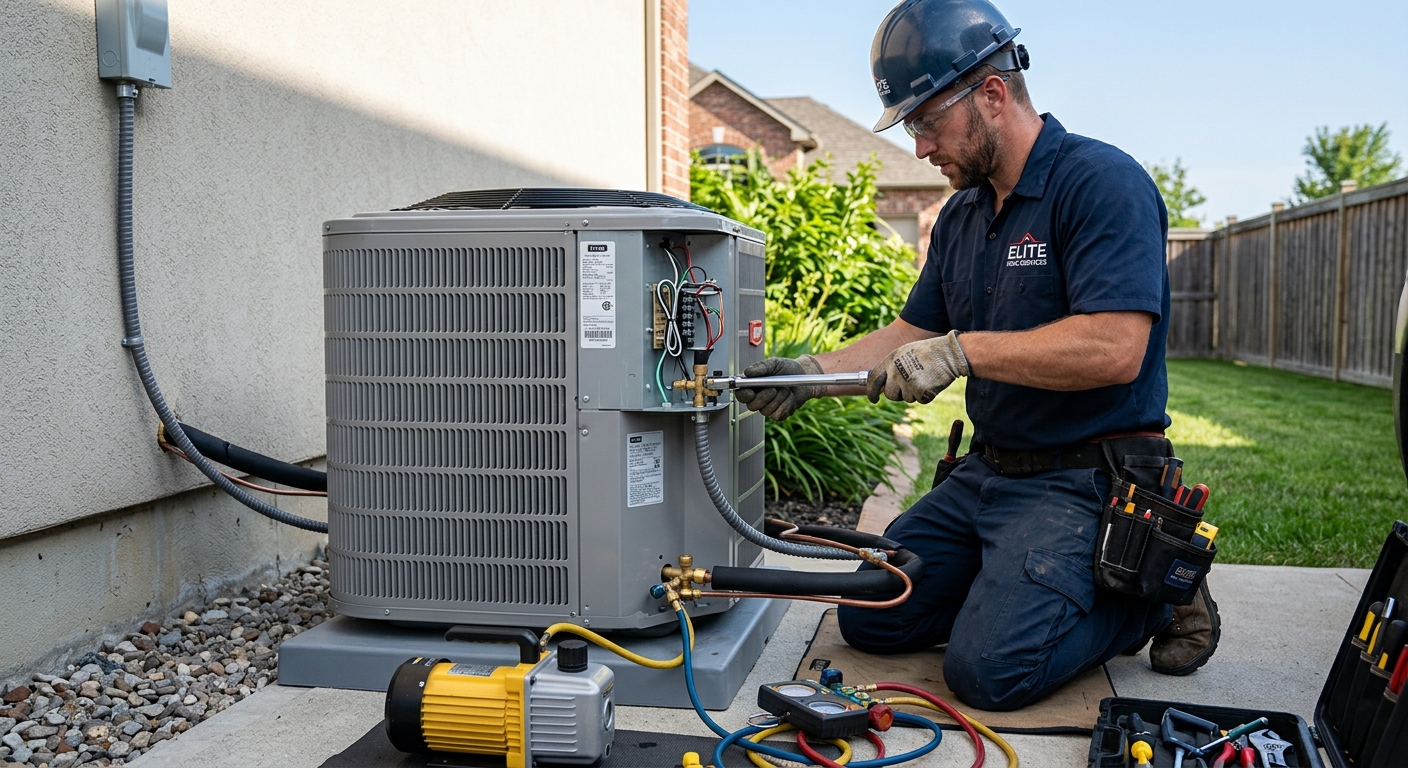
Jackson heating and cooling prices by system type — 2026
Jackson, with its 81.5% homeownership rate and a housing stock where 38.6% of homes were built before 1980 (U.S. Census Bureau, ACS 2024), presents a classic retrofit and replacement HVAC market. Most homes here were built during the mid-20th century and postwar era. That means many local houses already have ductwork, though its condition can vary, and fully ductless solutions are usually limited to additions or homes with major renovations.
Given Jackson’s 5,200 heating degree days and only 1,250 cooling degree days, this is truly a heating-dominated region. Any recommendation here leans toward systems that deliver reliable, efficient heat through the winter. Cooling remains important for summer comfort, but it's a secondary need by the numbers. As a result, homeowners should focus their money on heating performance and reliability first, especially if considering a new or upgraded system.
| System |
Best for |
Efficiency |
Price range (installed) |
| Central AC replacement (existing ducts) |
homes with sound ductwork |
16–20 SEER2 |
$5,100–$12,000 |
| Air source heat pump (ducted) |
year-round heating and cooling |
8–10 HSPF2 |
$8,100–$17,000 |
| Cold-climate heat pump (ducted) |
heat pump as primary heat |
9–11 HSPF2 |
$13,000–$17,000 |
| Ductless mini-split (single zone) |
additions, rooms without ducts |
20–30 SEER2 |
$3,200–$7,100 |
| Full duct system installation |
homes with no existing ducts |
— |
$9,100–$18,000 |
Installed estimates for a typical Jackson home. Equipment tonnage, duct condition and electrical capacity move these more than brand.
Choosing an installer in Lebanon County
Choosing the right HVAC installer in Lebanon County means putting skill before brand. The same equipment, if installed with poor airflow or a bad charge, will underperform or fail early—so reputation and process matter more than sticker logos. In Pennsylvania, any contract over $500 requires Home Improvement Contractor (HIC) registration, which you can confirm at hic.attorneygeneral.gov. Whoever handles the refrigerant must have EPA Section 608 certification. For your safety, make sure that any crew on-site is actually certified—the company’s paperwork doesn’t cover every tech.
Ask how load calculations are done (ideally with Manual J), and if your quote will list specific model numbers—not just “3 ton unit.” At installation, commissioning should mean documenting measured airflow and refrigerant charge, not just a quick startup. This sets apart a proper job from a shortcut. In a moderate contractor market like Lebanon–Harrisburg, there’s competition, but every market has shortcuts. Use this checklist:
- Confirm HIC registration at the state tool
- Verify workers’ compensation through WCAIS
- Request proof of general liability insurance
- Check that the technician holds EPA Section 608
certification
- Ask if Manual J (or equivalent) load calculation will be provided
- Get documentation that a municipal mechanical permit is included
- Insist on model numbers for both indoor and outdoor units in the quote
- Require a commissioning report with measured airflow and refrigerant charge
- Ensure warranty details break out equipment and labor separately
- Get scope for duct sealing or replacement if ducts are reused
- Request schedule and daily work hours upfront
- Never pay the full price upfront—deposit maximum specified under HICPA
If an installer rushes the quote, skips inspection, or tells you “the brand is all that matters,” keep looking. Jackson has enough legitimate contractors—don’t settle for less.
Retrofit versus replacement in Jackson
In Jackson, the housing stock mostly dates to the mid-20th century and immediate postwar decades. With 38.6% of homes built before 1980, much of the market involves replacing older systems or retrofitting upgrades. If your house was built before modern AC became common, existing ducts may have been sized just for heating, making them potentially undersized for effective cooling. Insulation and window quality in these older homes can also be inconsistent, translating to higher heating loads and occasional summer discomfort without AC upgrades.
For homes built later, into the suburban expansions, original builder-grade AC and furnaces are now hitting the end of their service lives. If you live in a subdivision with homes from the late 1990s or early 2000s, it’s likely your first replacement is due—especially since original units were often oversized to minimize callbacks, not monthly bills.
Older Jackson homes tend to have masonry chimneys or metal flues, and many still use natural gas where available, with rural homes on propane or oil. Electrical panels in pre-1980 homes were not built with heat pump loads in mind, so panel capacity must be checked—and possibly upgraded—before going all-electric. If your goal is to add AC where it never existed, expect to budget extra to replace or extend ductwork, especially if your current runs are leaky or poorly insulated.
SEER2, HSPF2 and AFUE decoded
SEER2 (Seasonal Energy Efficiency Ratio 2) rates cooling efficiency; HSPF2 (Heating Seasonal Performance Factor 2) rates the efficiency of heat pumps in heating; AFUE (Annual Fuel Utilization Efficiency) rates furnace efficiency. SEER2 and HSPF2 replaced the old SEER and HSPF standards—so numbers in older articles aren’t directly comparable to what’s sold today.
Because Jackson’s climate racks up 5,200 heating degree days but only 1,250 cooling degree days, heating efficiency (HSPF2 or AFUE) should drive your buying decision more than cooling performance. It’s worth paying for a ducted heat pump in the 8–10 HSPF2 range or a cold-climate unit at 9–11 HSPF2. With cooling, going above 18–20 SEER2 rarely pays back its extra cost in this moderate-cooling market, unless you run your AC heavily or are chasing every watt. Similarly, while high-AFUE furnaces (95% and above) make sense here, incremental gains beyond that save little over the life of the unit unless you heat a large home at a low thermostat setting. Prioritize where the utility bills add up across a Lebanon County winter, not on features that look good only on catalogs or websites.
Service plans: worth it or not?
Not all annual HVAC service plans are money well spent. The essentials don’t require a contract—proper filter changes with the right MERV rating for your blower, cleaning indoor and outdoor coils, clearing the condensate drain, and verifying refrigerant charge (not just topping it up). Adding refrigerant every year signals a leak: real maintenance means finding and fixing leaks, not “topping off.”
A good plan may bring value if it truly includes an annual tune-up, priority scheduling for breakdowns, and a steady 10–15% discount on repairs. Some plans, however, promise more than they deliver—watch out for contracts that focus on service call revenue rather than preventative care or which lock you in at high annual fees for little real service.
The best time to schedule any checkup is before the first real cold or heat hits—late September for heating, or early May for AC. Otherwise, you’re competing with emergency calls, and rushed jobs are rarely thorough. If your system is still under warranty, stick to the manufacturer’s required maintenance schedule; otherwise, simple diligence on your end often saves more than a locked-in plan.
What a Pennsylvania HVAC contractor must hold
Pennsylvania does not license HVAC contractors statewide for residential work. Instead, Jackson and all of Lebanon County regulate residential installation locally, requiring Home Improvement Contractor (HIC) registration from the state for any job over $500. You must verify registration using hic.attorneygeneral.gov. Mechanical permits come from your municipality or Lebanon County Planning Department, with inspections after installation. Federal law requires anyone handling refrigerant to hold EPA Section 608 certification—nothing in state law overrides that. If a company brings a trainee or helper for installation, the certified technician must perform all refrigerant work directly, not just “oversee.”
Workers’ compensation insurance is mandatory in Pennsylvania for employers and is confirmed through WCAIS (wcais.pa.gov). Always ask for a certificate of insurance for both liability and workers’ compensation, especially before work begins. If anyone tries to tell you a state “HVAC license” covers them, it’s a misunderstanding—residential regulation is municipal here, and you should check both HIC and local permit status.
There is no special state-level HVAC trade board, plumbing, or electrical license in this area for residential work. Inspectors will check for proper installation to the PA UCC (based on the IRC), and energy code compliance is a must for all major installs or retrofits here.
Comparing HVAC estimates in Jackson
To truly compare HVAC quotes in Jackson, you need more than a price and a brand name. Look for the model numbers of both indoor and outdoor equipment—these need to be matched for efficiency and warranty protection. Any quote should attach a room-by-room Manual J load calculation; if sizing is just copied from your old nameplate, you’re likely to get the wrong fit. Replacing or reusing the refrigerant line (line set) must be specified—old lines may carry debris or oil type issues. Electrical work, including panel upgrades, should be clearly scoped—especially if you’re moving to a heat pump. Quality companies include a commissioning report for measured airflow and proper refrigerant charge at startup, not “it’s blowing cold.”
Separate out what’s covered by your equipment warranty versus labor. Make sure permits are included as a line item—don’t accept that they’re “not needed.” If you see a quote with only Apple and a price, you can’t actually compare it to anything—and you’re missing what matters.
| Line item |
What to look for |
Red flag if… |
| Equipment |
model numbers, indoor and outdoor matched |
brand name only |
| Sizing |
load calculation attached |
matched to the old nameplate |
| Ductwork |
condition assessed, sealing scoped |
not mentioned |
| Electrical |
circuit and panel capacity confirmed |
assumed adequate |
| Line set |
replaced or documented as reused |
silent |
| Commissioning |
measured airflow and charge, documented |
no startup report |
| Warranty |
labour years stated separately |
manufacturer only |
| Permit |
included and priced |
'not needed' |
Frequently asked questions — HVAC installation in Jackson
Do older Jackson homes need ductwork replaced?
Most pre-1980 homes in Jackson do have existing ductwork because forced air heating was common here—but its quality and sizing can be an issue. Many of these runs were designed only for heating, not cooling, so if you’re adding central AC or a heat pump, the ducts can end up undersized or leaky. Energy lost through poor joints, thin insulation, or awkward branch runs can push up your bills fast. Full replacement doesn’t always make sense: if your ducts are sound and accessible, proper sealing and insulation may be enough, and you can save thousands. If you do need new ducts, costs land around $9,100–$18,000 for a full system. Always have a contractor assess condition and design before committing—sometimes a mix of repairs and upgrades delivers 90% of the benefit for far less money.
How is a tax credit different from a rebate?
In Jackson and the rest of Pennsylvania, a tax credit reduces the federal or state taxes you owe dollar-for-dollar, but you don’t get that benefit until you file your return the following year. Rebates, like those for some energy-efficient HVAC equipment or from PPL Electric Utilities, come back as a check or bill credit soon after installation. For example, a new heat pump in Jackson might qualify for a rebate or a federal tax credit, depending on the specs. The average system here runs $8,100–$17,000 installed, so a $1,000 rebate shaves the upfront cost, while a tax credit comes later. A good contractor will help you document both, but only rebates lower the price you actually pay at installation.
Do I need to be home during installation?
It’s strongly recommended that you or someone you trust be present at least at the beginning and end of the install day in Jackson. This lets you review the work area, ask questions about the process, and check on surprises—especially in older homes where hidden issues crop up. Full HVAC installs, such as a ducted heat pump (which runs $8,100–$17,000 installed), usually take one or two days, and the crew may need access to the attic, basement, or electrical panel. You don’t have to babysit, but being around to inspect ducts, get a start-up walk-through, and confirm finished work helps catch missed steps before the crew leaves.
Is an annual maintenance plan worth it?
In most Jackson homes, an annual plan is only worth the money if it brings actual value: a real annual tune-up, written checklist of what’s performed, priority service in peak seasons, and a standing repair discount. If it’s just a filter change and a 15-minute look over, you’re paying for very little. Most essential maintenance (filter changes, coil cleaning, checking refrigerant charge) can be handled with or without a contract as long as you stay proactive and schedule before the winter cold or summer rush. Given a service call often costs less than $400, only buy a plan if it covers more than you’ll realistically need, especially when equipment is still under warranty.
How much does a furnace replacement cost in Jackson?
Furnace replacement pricing isn’t listed in the 2026 ranges above, but in Jackson, you can use the heat pump price band as a point of reference—an installed high-efficiency gas furnace replacement typically falls between $5,100–$12,000, depending on system size and duct condition. Costs run toward the higher end if you add AC or need modifications for venting or gas lines. Utility rebates may lower your out-of-pocket a bit. Always get a detailed estimate listing equipment model, labor, ductwork, and permit fees.
Why do HVAC quotes in Jackson vary so much?
Quotes range widely in Jackson because houses here differ in age, ductwork condition, electrical service, and access. A midcentury home might just need a new AC at $5,100–$12,000, while an older farmhouse switching from oil to a heat pump can require new panels or full ductwork, sending costs up. Some quotes exclude key pieces like electrical upgrades or warranties. Also, some installers cut corners on system sizing, model matching, or commissioning—if a quote is much lower, it probably omits critical labor or aftercare. Get everything in writing and compare apples to apples, not just brands and prices.
Is it worth switching from oil or propane to a heat pump?
In many Jackson homes, especially with rising fuel prices, switching from oil or propane to a ducted heat pump (full installation at $8,100–$17,000) can bring real savings and comfort. Heat pumps are more efficient, require less maintenance, and avoid having to buy hundreds of gallons of fuel at once. Just be sure your home’s electric panel has enough capacity—upgrading may add cost. In rural areas without natural gas service, the payback from switching is fastest. If your ductwork is poor or you’re regularly losing power, it makes sense to consider back-up heat as well.
How do I verify an HVAC contractor's insurance?
In Pennsylvania, all legitimate contractors must carry general liability and workers’ compensation insurance, which is mandatory. In Jackson, always ask for a certificate of insurance before work starts. For workers’ compensation, confirm the employer’s status at WCAIS (wcais.pa.gov). HIC registration is also required for any job over $500. It’s your right to verify—any pushback is a warning sign. Never assume coverage is in place just because a company says they’re “registered.”
What size HVAC system does my Jackson home need?
The right size depends on your home’s square footage, insulation, window quality, ductwork, and sun exposure—never just square footage alone. A proper Manual J load calculation, reflecting local weather with 5,200 heating and 1,250 cooling degree days, is the standard here. Oversized systems cycle too quickly and waste energy; undersized ones won’t keep up in real cold. Most Jackson homes land in the 2.5–4 ton range, but don’t let anyone size your new AC (typically $5,100–$12,000 installed) or heat pump based on a guess or whatever’s on the old nameplate. Demand a room-by-room assessment.